For years, safety officials and motorcycle groups have been working hard to raise awareness of the presence of bikers on American roadways, from bumper stickers to public service announcements to billboards. Though some areas of the country have seen minor declines in injuries and fatalities involving bikers, the reality is that too many motorcyclists are still unwitting victims of motorists who simply don’t pay attention. Which has led many to conclude that perhaps the most effective safety campaign is one that promotes defensive driving.
What is Defensive Driving for a Motorcyclist?
The first step toward maximizing your defensive driving is to recognize that driving a car and riding a bike are two very different things. You may be an outstanding driver behind the wheel of a car, but you may need to take some time to learn how to safely ride your bike. If at all possible, work your way up to the big Harley.
Also, the bigger the motorcycle one of the best ways to start thinking defensively on a bike is to pretend that you are invisible. After all, to many other drivers, you essentially are. Assume that other motorists don’t see you and be prepared to take the action you need to ensure your safety. That may cause you to:
- Increase the distance between your bike and other vehicles
- Be on the lookout for escape routes, including the space between cars (but only in an emergency)
- Pay close attention at every intersection, as drivers may not be looking for you
- Recognize that most other motor vehicles are bigger than yours and don’t be invested in being in a particular spot at a particular time
Another really important component of driving defensively is keeping your bike in top condition. You need to know that the bike will respond in the event of an emergency, that you can either brake quickly and effectively, or that you can give it that little extra bit of gas to pull you past a dangerous situation.
Contact Weber & Nierenberg
At Weber & Nierenberg, we bring over 30 years of experience to people in and around San Francisco Bay Area who have been injured in a motorcycle accident. We built our practice on a strong commitment to personal service and attention. We’ll take the time to learn the unique aspects of your case, so that we can tailor our representation to get the outcome you want. When you hire us to help you pursue full and fair compensation for all your losses, Joe Nierenberg will work directly with you throughout the process.
To set up a free initial consultation with an experienced California motorcycle accident injury attorney, contact Weber & Nierenberg by e-mail or call our office at 1-866-288-6010.
 Even with the national campaigns to increase awareness of motorcyclists on America’s roadways, far too many bikers are hurt every year by motorists who claim they “just didn’t see them.” While you can never control what another driver will do, as a biker, there are some specific measures you can take to help increase your visibility and reduce the risk of
  California’s motorcycle laws are contained in the California Driver Handbook. According to that book, those individuals who are over age 18 but under age 21 are considered minors, and minors may obtain an M1/M2 instruction permit by completing an application. Those individuals who are over age 21 are classified as adult drivers. All adult drivers must complete the application requirements for a motorcycle license, attend a California Highway Patrol-approved motorcycle training course, pass a DMV skills test or submit a valid DL 389 to waive the skills test, and pass a road test. According to the California motorcycle laws, a skills test is required. During the skills test you must be able to use the following while maneuvering the motorcycle in a normal traffic situation: starter, kill switch, clutch, throttle, gear selector, dimmer switch, brakes, turn signals and horn. You must be able to demonstrate that you can control the motorcycle under normal circumstances. You will be required to weave through five traffic cones in the Serpentine Ride; ride around a circle twice in a clockwise direction while keeping the front wheel in a marked path and returning to the starting point by weaving through the row of five traffic cones in the Circle Ride; ride slowly between two parallel lines while keeping the front tire in the marked path and completing the circle path again in a counterclockwise direction in the Slow Ride; and ride in a straight line while shifting through the gears, first up and then down, and end with a smooth stop at the starting line in the Gear Shift Ride. This is a pass/fail test.
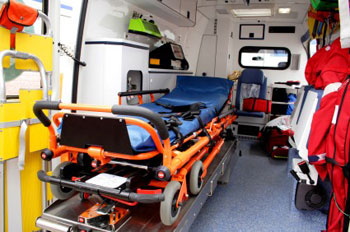 Six people have been injured in a crash on eastbound Interstate Highway 580 near San Leandro. The crash was reported just after 2 p.m. on Highway 580 near 150th Avenue. The accident left two people seriously injured and four others with moderate injuries.